Decoding the Genesis: Phil Knight’s Blue Ribbon Sports Journey to Nike
Phil Knight's journey from Blue Ribbon Sports to Nike represents a pivotal era in sports history. This article analyzes the foundational decisions made between 1964 and 1978, revealing their profound and enduring impact on Nike's global legacy by 2026.
Por: Rodrigo Lobato em 27 de novembro de 2025
Última atualização em: 21 de janeiro de 2026
Anúncios
Phil Knight’s journey from Blue Ribbon Sports to Nike, marked by critical decisions between 1964 and 1978, established the blueprint for a global athletic powerhouse, significantly impacting its 2026 legacy.
Decoding the Genesis: Phil Knight’s Blue Ribbon Sports Journey to Nike, Analyzing Key Decisions from 1964-1978 and their 2026 Legacy is more than just a business story; it’s an epic tale of innovation, perseverance, and strategic foresight that shaped a global phenomenon. From humble beginnings importing Japanese running shoes to establishing one of the most recognizable brands on Earth, the foundational years of Blue Ribbon Sports (BRS) laid the groundwork for Nike’s enduring success. Join us as we delve into the critical moments and decisions that defined this transformative period, examining their profound reverberations nearly six decades later in 2026.
the humble beginnings: blue ribbon sports takes flight (1964-1971)
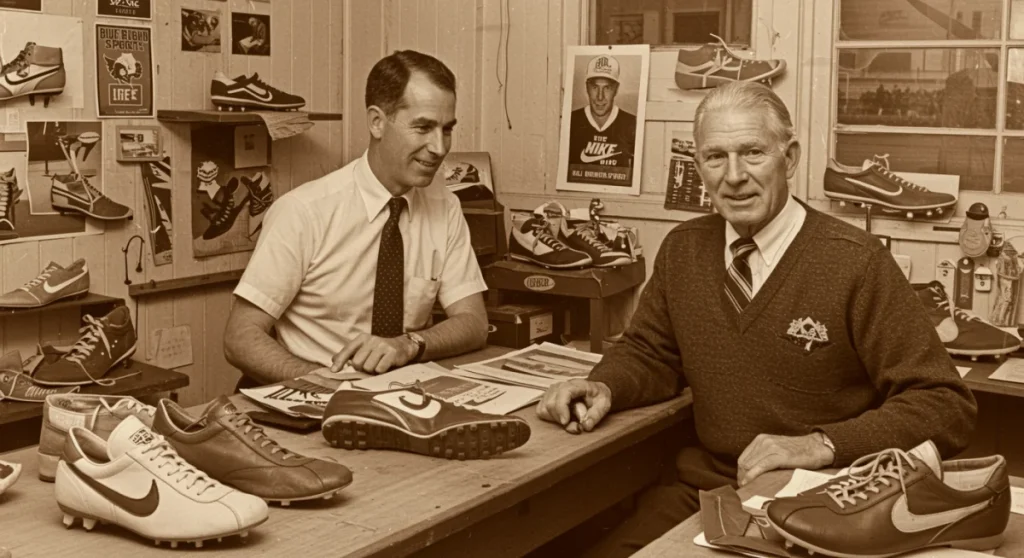
The genesis of a global empire often starts with a simple idea and a bold step. For Phil Knight, that step was an impromptu meeting with Japanese shoe manufacturers in 1964. Blue Ribbon Sports began as a distributor, a small operation fueled by Knight’s passion for running and his mentor Bill Bowerman’s relentless pursuit of better athletic footwear. This initial phase was characterized by bootstrapping, personal sacrifices, and a deep understanding of the runner’s needs.
The early years were a constant hustle, with Knight selling shoes from the trunk of his car at track meets. This direct-to-consumer approach not only minimized overhead but also created an invaluable direct feedback loop with athletes. Bowerman, meanwhile, was tirelessly experimenting with shoe designs, turning his wife’s waffle iron into a mold for innovative soles, a testament to their DIY spirit.
the onitsuka tiger partnership
Initial import agreement: Knight secured a deal to distribute Onitsuka Tiger shoes in the United States, a crucial first step.
Learning the ropes: This partnership provided invaluable insight into the manufacturing, distribution, and marketing of athletic footwear.
Building a network: Early sales efforts helped establish a grassroots network of coaches and athletes who would become brand advocates.
The decision to partner with Onitsuka Tiger was strategic, allowing BRS to enter the market without the immense capital required for manufacturing. It was a calculated risk that paid off, providing a stable product line and allowing Knight and Bowerman to focus on sales and design innovation. This period was essential for building the operational foundation and market understanding that would later empower their independence.
the split with onitsuka and the birth of nike (1971-1972)
As Blue Ribbon Sports grew, so did the tensions with Onitsuka Tiger. Disagreements over distribution rights, product quality, and creative control became increasingly pronounced. Phil Knight realized that for BRS to truly thrive and innovate, it needed to control its own destiny. This pivotal realization led to the audacious decision to sever ties with their Japanese partners and launch their own brand.
This was a high-stakes gamble. BRS had built its business on Onitsuka’s products, and moving away meant starting almost from scratch in terms of manufacturing and brand identity. However, Knight and Bowerman possessed a clear vision for the future, one that prioritized innovation and a direct connection with athletes. The need for a new name and logo became paramount.
the swoosh and the new identity
The search for a name: Jeff Johnson, BRS’s first full-time employee, proposed “Nike,” named after the Greek goddess of victory.
The iconic logo: Carolyn Davidson, a graphic design student, created the now-famous “Swoosh” for a mere $35.
Establishing independence: The creation of their own brand allowed for complete control over design, production, and marketing.
The introduction of the Nike brand and the iconic Swoosh in 1971-1972 marked a definitive turning point. It wasn’t just a rebranding; it was a declaration of independence and a statement of intent. This bold move, born out of necessity and ambition, set Nike on a path to becoming a global powerhouse, free from the constraints of its former partnership.
innovation and athletic endorsement: the early competitive edge (1972-1975)
With Nike established, the focus shifted intensely towards product innovation and strategic marketing. Bill Bowerman’s genius for shoe design, combined with Phil Knight’s marketing acumen, created a formidable combination. They understood that to compete with established giants, they needed superior products and compelling stories.
The early 1970s saw Nike introduce groundbreaking technologies that genuinely improved athletic performance. The emphasis was always on the athlete, a philosophy deeply ingrained by Bowerman’s coaching background. This focus translated into shoes that were lighter, offered better traction, and provided enhanced cushioning, directly addressing the needs of runners.
key product innovations
Waffle Trainer: Introduced in 1974, its unique outsole provided superior grip without spikes, revolutionizing running shoes.
Cortez: A classic design that gained popularity for its comfort and durability, becoming one of Nike’s first bestsellers.
Tailwind: Debuted in 1978, it was the first running shoe to feature Nike Air technology, a revolutionary cushioning system.
Beyond product, Nike pioneered the concept of athlete endorsement. They understood that having top athletes wear and promote their shoes offered unparalleled credibility. This wasn’t just about advertising; it was about building authentic relationships with the athletic community, a strategy that continues to define Nike’s marketing approach in 2026.
expanding reach: distribution and manufacturing challenges (1975-1977)
As Nike’s popularity surged, the company faced new challenges related to scaling operations. Moving from a distributor to a full-fledged manufacturer and global brand required significant investment in infrastructure, supply chains, and human capital. This period was marked by rapid expansion but also by growing pains as they navigated the complexities of international trade and increased production demands.
Knight and his team had to make critical decisions about how to produce their shoes efficiently and cost-effectively while maintaining quality. They began exploring manufacturing options beyond Japan, diversifying their supply chain to reduce risks and increase capacity. This foresight in establishing a robust global manufacturing network would prove invaluable in the decades to come.
overcoming import tariffs and legal battles
“Dumping duties”: Nike faced significant import tariffs from the U.S. government, claiming they were selling shoes below cost.
Strategic litigation: Knight famously fought these battles, demonstrating resilience in protecting the company’s fledgling interests.
Diversifying production: The need to avoid future tariffs accelerated the shift towards manufacturing in other Asian countries like Taiwan and South Korea.
The challenges of distribution and manufacturing during this era forged Nike’s operational resilience. Phil Knight’s willingness to confront legal and logistical hurdles head-on ensured that the company could continue its rapid growth trajectory. These experiences instilled a proactive approach to global supply chain management that remains a core competency for Nike today.
the turning point: nike air and the future (1978)
The year 1978 stands as a monumental year for Nike, largely due to the introduction of Nike Air technology. This innovation, conceived by former NASA engineer Frank Rudy, represented a paradigm shift in athletic footwear. Embedding encapsulated air units into shoe soles offered superior cushioning and shock absorption, providing a tangible performance advantage for athletes.
The decision to invest heavily in this unproven technology was a testament to Nike’s commitment to innovation. It was a bold move that required significant research, development, and manufacturing adjustments. However, Phil Knight and Bill Bowerman recognized the potential of Nike Air to differentiate their products significantly in an increasingly competitive market.
the impact of nike air
Revolutionary cushioning: Nike Air provided a softer, more responsive ride, enhancing comfort and reducing impact.
Competitive advantage: It gave Nike a unique selling proposition that competitors struggled to replicate.
Foundation for future innovations: Nike Air became a cornerstone technology, evolving into various forms like Air Max and Zoom Air.
The launch of the Tailwind running shoe, featuring Nike Air, was a game-changer. It solidified Nike’s reputation as an innovative leader and set the stage for explosive growth in the 1980s. This strategic decision in 1978 not only propelled Nike forward but also established a legacy of technological advancement that continues to define the brand in 2026.
the 2026 legacy: enduring principles from 1964-1978
Looking back from 2026, the decisions made by Phil Knight and Bill Bowerman between 1964 and 1978 ripple through every aspect of Nike’s current operations. The core principles established during this formative period – innovation, athlete-centric design, aggressive marketing, and global vision – remain the pillars of the company’s success. Nike’s current dominance in athletic footwear and apparel is a direct consequence of these early foundational choices.
The entrepreneurial spirit of BRS, the willingness to take risks, and the relentless pursuit of improvement are still embedded in Nike’s corporate culture. The brand’s ability to constantly reinvent itself, while staying true to its athletic roots, can be traced back to the innovative mindset cultivated in its earliest days. From sustainable manufacturing practices to digital integration, Nike’s evolution reflects the foundational blueprint laid down decades ago.
modern manifestations of early decisions
Direct-to-consumer model: Echoes of Knight selling shoes from his car are seen in Nike’s robust e-commerce and direct retail strategies.
Athlete partnerships: The early endorsements have evolved into sophisticated collaborations with global icons, driving brand relevance.
Technological leadership: Nike Air’s legacy is evident in ongoing investments in materials science, data analytics, and performance-enhancing technologies.
The journey from Blue Ribbon Sports to Nike is a powerful narrative of how strategic decisions, made during a company’s infancy, can shape its destiny for generations. The legacy of Phil Knight’s vision and Bill Bowerman’s innovation continues to inspire and inform Nike’s strategies in 2026, ensuring its position at the forefront of the global sports industry.
Key Decision
Impact on Nike’s Legacy
Onitsuka Partnership (1964)
Provided market entry and operational learning, crucial for early growth.
Nike & Swoosh Launch (1971)
Established independent brand identity and creative control.
Cemented Nike’s reputation as an innovation leader, setting future trends.
frequently asked questions about nike’s early years
What was Blue Ribbon Sports before it became Nike?▼
Blue Ribbon Sports (BRS) was initially an American distributor for Japanese shoemaker Onitsuka Tiger, founded by Phil Knight and Bill Bowerman in 1964. They sold shoes primarily to track athletes, with Knight often operating sales from his car at sporting events.
Who designed the iconic Nike Swoosh logo and how much did it cost?▼
The iconic Nike Swoosh logo was designed by Carolyn Davidson, a graphic design student at Portland State University, in 1971. She was paid a modest sum of $35 for her design, which has since become one of the most recognizable logos globally.
What was Bill Bowerman’s main contribution to Nike’s early success?▼
Bill Bowerman, a track and field coach, was the innovative force behind Nike’s early product development. His relentless experimentation with shoe designs, including the revolutionary Waffle outsole, provided Nike with a significant performance advantage and shaped its athlete-centric philosophy.
When was Nike Air technology first introduced and in which shoe?▼
Nike Air technology was first introduced in 1978, making its debut in the Nike Tailwind running shoe. This innovation, developed by aerospace engineer Frank Rudy, provided encapsulated air cushioning, revolutionizing comfort and performance in athletic footwear.
How do Nike’s early decisions impact its brand in 2026?▼
Nike’s early decisions profoundly shaped its 2026 brand. The emphasis on innovation, athlete endorsement, direct consumer connection, and global manufacturing established a resilient foundation. These core values continue to drive Nike’s product development, marketing strategies, and market leadership in the modern era.
conclusion
The journey from Blue Ribbon Sports to Nike, meticulously charted between 1964 and 1978, is a masterclass in entrepreneurial vision and strategic execution. Phil Knight’s unwavering determination, coupled with Bill Bowerman’s relentless innovation, laid an indelible foundation for what would become a global icon. Every pivotal decision, from the initial Onitsuka partnership and the audacious launch of the Nike brand to the groundbreaking introduction of Nike Air, was a calculated step towards building a company that understood and championed the athlete.
As we observe Nike in 2026, its enduring legacy is a direct reflection of these formative years. The principles of innovation, aggressive marketing, and a deep connection to athletic performance continue to define the brand. The story of Nike’s genesis is not just about shoes; it’s about the power of belief, the courage to innovate, and the strategic foresight to build a brand that transcends generations, proving that the earliest decisions often cast the longest shadows.
Aviso Importante: This website is for educational and informational purposes only. We have no link, connection, affiliation, partnership, sponsorship, or authorization with any public entities, government programs, financial institutions, companies, or brands that may be mentioned. All names, trademarks, logos, and products mentioned are the property of their respective owners and are cited solely for educational and informational purposes for our readers. Under no circumstances do we request personal data, sensitive information, or any monetary transactions from our users.
Rodrigo Lobato
I am a content creator, driven by the idea that the right words can open doors and generate real change. I write with purpose, seeking to motivate, connect, guide, and empower readers to grow and make confident choices on their journey.