Nike Town Experience: 1990 Opening & 2026 DTC Strategy
The Nike Town experience, first launched in 1990, revolutionized retail by creating an immersive brand environment, profoundly influencing Nike's evolving direct-to-consumer strategy and shaping its future market presence by 2026.
Por: Rodrigo Lobato em 10 de dezembro de 2025
Última atualização em: 21 de janeiro de 2026
Anúncios
The Nike Town experience, first launched in 1990, revolutionized retail by creating an immersive brand environment, profoundly influencing Nike’s evolving direct-to-consumer strategy and shaping its future market presence by 2026.
The year 1990 marked a pivotal moment in retail history with the grand opening of the first Nike Town Experience. This wasn’t merely a store; it was a bold statement, a theatrical presentation of a brand that understood the power of connection beyond a simple transaction. Its influence has reverberated through decades, fundamentally shaping Nike’s direct-to-consumer (DTC) strategy, which is set to culminate in an ambitious vision for 2026. How did this pioneering retail concept, born over three decades ago, lay the groundwork for Nike’s future dominance in the retail landscape?
The Genesis of an Icon: Nike Town’s 1990 Debut
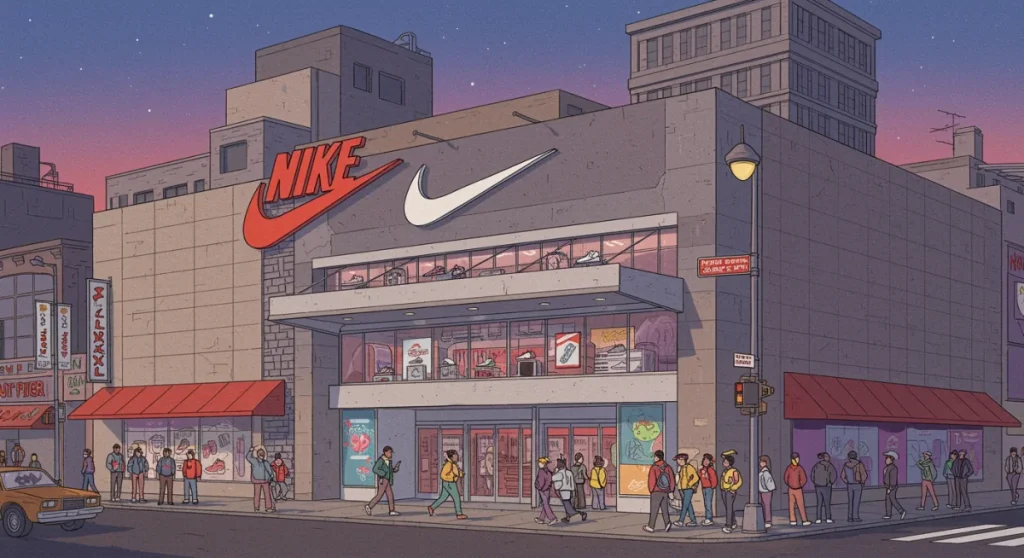
In 1990, Nike launched its first Nike Town store, not just as a retail outlet, but as an experiential destination. Located in downtown Portland, Oregon, this innovative concept aimed to immerse customers in the Nike brand, far beyond what traditional sporting goods stores offered. It was a bold move that redefined retail.
The idea was simple yet revolutionary: create a space where customers could touch, feel, and truly experience the spirit of Nike. This meant more than just displaying products; it involved storytelling, interactive exhibits, and a palpable energy that celebrated sport and athletic achievement. The store wasn’t just selling shoes; it was selling a dream, an aspiration, a lifestyle.
Architectural Innovation and Thematic Zones
The design of the first Nike Town was meticulously crafted to reflect the brand’s dynamic identity. Each section of the store was a carefully curated environment, designed to transport visitors into different facets of the Nike universe.
Basketball Court Entrance: Customers were greeted by a simulated basketball court, immediately setting an athletic tone.
Running Track Displays: Running shoes were showcased alongside visual narratives of iconic track and field moments.
Interactive Exhibits: Early forms of digital displays and hands-on demonstrations allowed customers to engage with product technology.
Brand Storytelling: Murals and historical artifacts highlighted Nike’s journey and legendary athletes.
This thematic approach transformed shopping into an adventure, turning casual browsers into engaged participants. The attention to detail, from the materials used in construction to the background music, all contributed to a cohesive and memorable brand experience. It was a masterclass in environmental design, proving that a store could be much more than a place of transaction.
The initial Nike Town proved that consumers craved more than just products; they desired connection, inspiration, and a sense of belonging. This understanding became a cornerstone of Nike’s future retail and brand development strategies, setting a new benchmark for what a physical store could achieve.
Shaping Brand Perception Through Immersive Retail
The opening of Nike Town in 1990 was a masterstroke in brand building, fundamentally altering how consumers perceived Nike. Prior to Nike Town, Nike was primarily known for its athletic footwear and apparel, sold through wholesale channels. The new retail concept elevated the brand from a product manufacturer to a cultural icon, a purveyor of experiences.
By creating a dedicated space that celebrated its heritage, innovations, and star athletes, Nike fostered a deeper emotional connection with its audience. Customers didn’t just buy a pair of sneakers; they bought into the Nike ethos of athletic excellence, determination, and style. This immersive approach was crucial for cultivating brand loyalty that transcended product cycles.
The Role of Storytelling in Retail Spaces
Nike Town excelled at storytelling, using its physical space to narrate the brand’s journey and achievements. This narrative approach created a powerful sense of authenticity and inspiration.
Athlete Endorsements: Prominent displays featuring Michael Jordan, Bo Jackson, and other legends reinforced Nike’s association with top-tier performance.
Innovation Showcases: Sections dedicated to Air technology or new fabric developments demonstrated Nike’s commitment to cutting-edge design.
Historical Context: Vintage shoes and marketing campaigns provided a rich historical backdrop, connecting past successes with present innovations.
Community Hub: The store often hosted events, signings, and product launches, transforming it into a gathering place for enthusiasts.
This strategic use of storytelling within the retail environment made the brand feel more human and accessible. It allowed customers to see themselves as part of the Nike journey, fostering a sense of community and shared values. The emotional resonance generated by Nike Town was unparalleled for its time, solidifying Nike’s position as a lifestyle brand rather than just a sportswear company.
Ultimately, Nike Town demonstrated that a retail space could be a powerful medium for communicating brand values and forging lasting relationships with consumers. This insight proved invaluable as Nike began to explore more direct engagement with its customer base, setting the stage for future strategic shifts.
Nike’s Early Direct-to-Consumer Endeavors
While Nike Town was a physical manifestation of direct brand engagement, Nike’s broader direct-to-consumer (DTC) journey began to take shape even before its grand opening. The company recognized the strategic importance of controlling its brand narrative and customer relationship, moving beyond traditional wholesale models. The experience cultivated at Nike Town provided invaluable lessons for scaling these DTC ambitions.
Early DTC efforts included mail-order catalogs and nascent e-commerce initiatives. These channels allowed Nike to collect valuable customer data and experiment with direct communication. The insights gained from these early ventures, combined with the experiential success of Nike Town, began to inform a more comprehensive DTC strategy.
Building a Direct Relationship with the Consumer
Nike’s shift towards DTC was driven by a desire for greater control over its brand image, pricing, and customer service. It sought to minimize reliance on third-party retailers and foster a more intimate connection.
Early E-commerce Platforms: Nike began investing in its own online storefronts, allowing direct purchases and product customization.
Exclusive Product Drops: Using direct channels for limited edition releases built anticipation and brand exclusivity.
Customer Data Collection: Direct sales provided rich data on consumer preferences, purchasing habits, and demographics.
Personalized Marketing: Insights from direct interactions enabled more targeted and effective marketing campaigns.
These early steps were foundational in understanding the complexities and opportunities of a direct relationship with the consumer. Nike learned that direct channels offered not only increased revenue potential but also a direct feedback loop, allowing for quicker adaptation to market trends and consumer demands. This adaptability became a significant competitive advantage.
The success of Nike Town underscored the importance of creating a unique brand experience, a lesson that seamlessly translated into Nike’s developing DTC strategy. The physical store became a blueprint for the digital experience, emphasizing storytelling and engagement in every customer touchpoint.
The Evolution of Nike’s Retail Strategy Post-1990
Following the groundbreaking success of the first Nike Town, Nike’s retail strategy underwent a significant evolution. The initial experiential store was not an isolated experiment but rather the vanguard of a new retail philosophy. Nike began to replicate and refine the Nike Town concept, expanding to key urban centers globally, each designed to reflect local culture while maintaining the overarching brand identity.
This expansion signaled a clear commitment to owned retail spaces as a critical component of its brand strategy. These stores served not only as sales points but also as powerful marketing tools, reinforcing Nike’s premium positioning and innovative spirit. They became physical touchpoints for a brand increasingly focused on direct engagement.
Integrating Digital and Physical Experiences
As technology advanced, Nike began to seamlessly integrate its digital platforms with its physical retail presence, creating an omnichannel experience long before the term became commonplace. This integration was key to staying relevant in a rapidly changing retail landscape.
In-store Digital Displays: Interactive screens provided product information, customization options, and access to online inventory.
Click and Collect Services: Customers could order online and pick up in-store, blurring the lines between digital and physical shopping.
Nike App Integration: The Nike app became a central hub for loyalty programs, personalized recommendations, and exclusive in-store experiences.
Data-Driven Store Layouts: Insights from online behavior informed physical store merchandising and product placement.
This convergence of digital and physical realms allowed Nike to offer a highly personalized and convenient shopping journey. The physical stores served as experiential hubs, while digital channels provided efficiency and expanded reach. This dual approach maximized customer engagement and streamlined operations.
The lessons learned from the original Nike Town – the importance of experience, storytelling, and direct connection – continued to inform this evolving strategy. Nike recognized that a strong physical presence, when intelligently integrated with digital capabilities, could create an unparalleled competitive advantage and reinforce its direct-to-consumer ambitions.
Nike’s 2026 Direct-to-Consumer Strategy: A Vision Fulfilled
Looking ahead to 2026, Nike’s direct-to-consumer (DTC) strategy represents the culmination of decades of learning, with the foundational principles established by the original Nike Town experience still very much evident. The brand is committed to deepening its direct relationships with consumers globally, leveraging advanced technology and personalized experiences to drive growth and loyalty.
The 2026 strategy is characterized by a relentless focus on digital innovation, a streamlined retail footprint, and an unparalleled understanding of individual consumer needs. Nike aims to create a hyper-personalized journey for every customer, from initial discovery to post-purchase engagement, all orchestrated through its owned channels.
Pillars of the 2026 DTC Strategy
Nike’s future DTC approach is built upon several interconnected pillars, each designed to enhance the customer experience and optimize operational efficiency.
Hyper-Personalization at Scale: Utilizing AI and machine learning to deliver tailored product recommendations, content, and offers.
Expanded Digital Ecosystem: Strengthening the Nike App, SNKRS app, and Nike.com as primary interaction and transaction points.
Strategic Retail Flagships: Investing in fewer, larger, and more technologically advanced physical stores that serve as experiential hubs and community centers.
Sustainable Supply Chain: Optimizing logistics for faster, more efficient direct-to-consumer delivery, with a focus on environmental responsibility.
Community Building: Fostering stronger connections through fitness events, exclusive member programs, and digital communities.
This comprehensive strategy underscores Nike’s commitment to owning the entire customer journey. By controlling every touchpoint, Nike can ensure brand consistency, gather invaluable data, and respond with agility to market shifts. The vision for 2026 is not just about selling products; it’s about curating a complete lifestyle for the Nike consumer, echoing the immersive spirit of the original Nike Town.
The influence of the 1990 Nike Town is undeniable in this forward-looking strategy. The initial concept proved the power of experience and direct engagement, lessons that Nike has masterfully scaled and integrated into its ambitious plans for a direct-first future.
The Enduring Legacy of Experiential Retail
The legacy of the first Nike Town, opened in 1990, extends far beyond its initial success. It established a paradigm for experiential retail that continues to influence brand strategies across industries. By demonstrating that a store could be a powerful extension of a brand’s identity and a hub for community engagement, Nike Town set a new standard for customer interaction.
This pioneering approach taught brands the importance of creating memorable moments and fostering emotional connections, rather than simply facilitating transactions. In an increasingly digital world, the principles of experiential retail remain more relevant than ever, as physical spaces evolve to complement and enhance online interactions.
Key Principles from Nike Town’s Enduring Influence
Several core tenets from the original Nike Town continue to resonate in contemporary retail and brand strategies.
Brand Immersion: The importance of creating environments that fully encapsulate a brand’s ethos and values.
Narrative Engagement: Using storytelling to build deeper connections and convey brand history and innovation.
Interactive Touchpoints: Integrating elements that encourage active participation and discovery from customers.
Community Hubs: Positioning physical stores as places for gathering, events, and shared experiences.
Seamless Integration: Blending physical and digital elements to create a cohesive and convenient customer journey.
These principles are not just theoretical; they are actively being implemented in Nike’s 2026 direct-to-consumer strategy, where flagship stores serve as high-tech experiential centers that seamlessly connect with the digital ecosystem. The physical presence, while perhaps smaller in number, is more impactful and strategically vital than ever.
The enduring legacy of Nike Town is a testament to the foresight of its creators. It proved that investing in a rich, immersive brand experience could yield profound long-term benefits, shaping not just Nike’s trajectory but the broader retail landscape for decades to come.
Challenges and Opportunities in Nike’s DTC Future
As Nike propels its direct-to-consumer strategy towards 2026, it navigates a complex landscape filled with both significant challenges and unparalleled opportunities. The ambition to control the entire customer journey demands continuous innovation, robust technological infrastructure, and an acute understanding of evolving consumer behaviors. The stakes are high, but so too are the potential rewards for a brand that has consistently pushed boundaries.
One of the primary challenges lies in maintaining the balance between global scale and local relevance. While a centralized DTC strategy offers efficiency, Nike must ensure its approach resonates with diverse cultural nuances and regional preferences. Another hurdle is managing the transition away from traditional wholesale partners without alienating key segments of its customer base or disrupting established distribution networks. The digital realm also presents constant competition, requiring continuous investment in cutting-edge technology and cybersecurity.
Navigating the Competitive Landscape and Consumer Expectations
The retail environment is more dynamic than ever, with consumer expectations constantly rising. Nike’s DTC strategy must not only meet these expectations but proactively anticipate them.
Data Privacy Concerns: Balancing personalized experiences with increasing demands for data security and privacy.
Sustainability Demands: Meeting consumer expectations for environmentally conscious products, packaging, and supply chains.
Hyper-Personalization Fatigue: Avoiding over-saturation while delivering relevant and timely communications.
Logistical Complexities: Scaling direct fulfillment to meet rapid delivery expectations globally.
Competitor Innovation: Staying ahead in a crowded market where new brands and retail models emerge constantly.
Despite these challenges, the opportunities for Nike are immense. A successful DTC model allows for higher profit margins, direct access to invaluable customer data, and unparalleled brand control. It enables faster product iterations, more targeted marketing, and the ability to build a truly global community around the Nike brand. The insights gleaned from the original Nike Town, particularly regarding the power of direct engagement and experiential connection, provide a solid foundation for overcoming these obstacles.
Ultimately, Nike’s 2026 DTC strategy is a bold declaration of its commitment to innovation and customer-centricity. By embracing the lessons of its past, particularly the immersive approach pioneered by Nike Town, and adapting them to a future-forward vision, Nike aims to solidify its position as a leader in both sportswear and retail innovation.
Key Aspect
Impact and Evolution
1990 Nike Town Opening
Revolutionized retail by creating an immersive, experiential brand destination, setting new standards for customer engagement.
Brand Perception Shift
Elevated Nike from a product manufacturer to a cultural and lifestyle icon through storytelling and emotional connection.
DTC Strategy Foundation
Provided critical insights into direct customer relationships, informing early e-commerce and personalized marketing efforts.
2026 DTC Vision
Aims for hyper-personalization, expanded digital ecosystems, and strategic experiential retail, fulfilling the original Nike Town promise.
Frequently Asked Questions About Nike’s Retail Evolution
What made the original Nike Town different from other stores in 1990?▼
The original Nike Town was unique due to its immersive, experiential approach. It wasn’t just a store but a themed destination featuring interactive exhibits, storytelling, and a deep dive into Nike’s brand history and athletic culture, transforming shopping into an engaging experience.
How did Nike Town influence Nike’s direct-to-consumer strategy?▼
Nike Town demonstrated the power of direct brand engagement and emotional connection. These lessons were crucial in shaping Nike’s DTC strategy, emphasizing personalized experiences, brand storytelling, and the importance of owning the customer relationship, which now extends across digital platforms.
What are the key components of Nike’s 2026 DTC strategy?▼
Nike’s 2026 DTC strategy focuses on hyper-personalization through AI, an expanded digital ecosystem via apps and websites, strategic flagship stores as experiential hubs, a sustainable supply chain, and robust community building through member programs and events.
Has the concept of experiential retail evolved since Nike Town’s debut?▼
Yes, experiential retail has evolved significantly, integrating advanced technology like AR/VR and AI. However, the core principles established by Nike Town—brand immersion, interactive engagement, and emotional connection—remain foundational to modern experiential retail designs.
What role do physical stores play in Nike’s 2026 direct-to-consumer plan?▼
Physical stores in Nike’s 2026 DTC plan will serve as strategic, technologically advanced flagship locations. They act as experiential hubs, community centers, and key points for omnichannel services, seamlessly integrating with Nike’s digital ecosystem to offer a holistic customer journey.
Conclusion
The journey from the groundbreaking opening of the first Nike Town in 1990 to Nike’s ambitious direct-to-consumer strategy for 2026 illustrates a remarkable evolution in retail. What began as an innovative physical space designed to immerse consumers in the Nike brand has become the blueprint for a sophisticated, digitally-driven approach to customer engagement. The core tenets established over three decades ago—experiential storytelling, direct connection, and brand elevation—continue to resonate, shaping Nike’s future in an increasingly competitive market. As Nike pushes forward with hyper-personalization and a seamless omnichannel experience, the enduring legacy of the Nike Town Experience remains a testament to the power of visionary retail and its profound impact on brand loyalty and market leadership.
Aviso Importante: This website is for educational and informational purposes only. We have no link, connection, affiliation, partnership, sponsorship, or authorization with any public entities, government programs, financial institutions, companies, or brands that may be mentioned. All names, trademarks, logos, and products mentioned are the property of their respective owners and are cited solely for educational and informational purposes for our readers. Under no circumstances do we request personal data, sensitive information, or any monetary transactions from our users.
Rodrigo Lobato
I am a content creator, driven by the idea that the right words can open doors and generate real change. I write with purpose, seeking to motivate, connect, guide, and empower readers to grow and make confident choices on their journey.