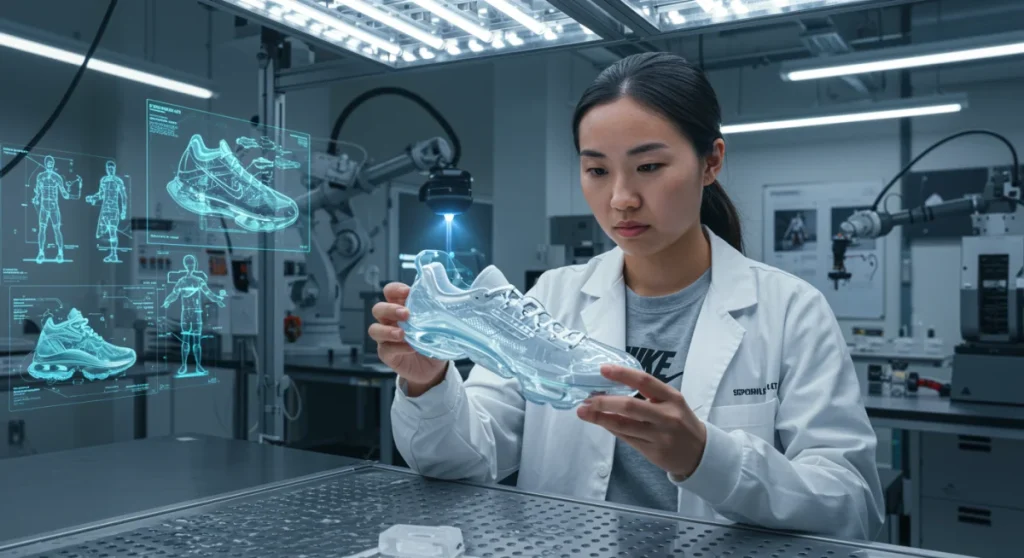
Nike's Advanced Research Lab is pioneering four groundbreaking technologies set to revolutionize its 2026 product launches, focusing on enhanced athlete performance, sustainability, and personalized experiences through cutting-edge design and material science.
Por: Rodrigo Lobato em 13 de janeiro de 2026
Última atualização em: 21 de janeiro de 2026
Anúncios
Nike’s Advanced Research Lab is actively developing four pivotal technologies slated for its 2026 product launches, aiming to redefine athletic performance and user experience through innovative material science and design methodologies.
Ever wondered what goes on behind the closed doors of Nike’s innovation hub? We’re taking you behind the scenes: how Nike’s Advanced Research Lab is shaping 4 upcoming technologies for 2026 product launches, promising to redefine athletic performance and sustainability. Get ready to discover the future of sportswear.
Anúncios
The innovation engine: Nike Sport Research Lab’s mission
The Nike Sport Research Lab (NSRL) isn’t just a facility; it’s the beating heart of Nike’s future. For decades, this secretive lab has been the birthplace of revolutionary advancements, from Air Max cushioning to Flyknit uppers. Its mission remains clear: to understand the human body in motion and engineer solutions that empower athletes to perform at their peak. This involves a multidisciplinary approach, blending biomechanics, material science, and data analytics to create products that are not just better, but truly transformative.
The lab’s culture fosters relentless experimentation and a deep commitment to athlete-centric design. Researchers work hand-in-hand with elite athletes, gathering invaluable feedback that directly informs the development process. This symbiotic relationship ensures that every innovation is rigorously tested and validated in real-world scenarios, addressing genuine needs and challenges faced by athletes across all disciplines. The insights gained from these collaborations are critical, pushing the boundaries of what’s possible in sports apparel and footwear.
Advancing athlete insights
At the core of the NSRL’s success is its sophisticated data collection and analysis. High-speed cameras, pressure sensors, and motion capture technology provide a granular view of athletic movement. This data is then translated into actionable insights, guiding designers and engineers in crafting precise solutions.
Anúncios
Biomechanics analysis for optimal movement patterns.
Physiological monitoring for fatigue and recovery insights.
Environmental simulations to test product durability.
Athlete feedback integration for iterative design improvements.
The lab’s continuous pursuit of knowledge ensures that Nike remains at the forefront of sports science, consistently delivering products that offer a tangible advantage. The dedication to understanding every nuance of athletic performance is what truly differentiates Nike’s approach to innovation.
Ultimately, the NSRL’s overarching goal is to create a seamless connection between the athlete and their gear. By pushing the boundaries of scientific research and technological development, they aim to unlock new levels of potential for every individual, from professional competitors to everyday fitness enthusiasts. This relentless drive for improvement is the foundation upon which Nike builds its future, constantly striving for excellence.
Technology 1: Adaptive cushioning systems for personalized comfort
One of the most anticipated breakthroughs from Nike’s lab for 2026 is the evolution of adaptive cushioning. Imagine a shoe that dynamically adjusts its firmness and responsiveness based on your gait, weight, and the demands of your activity. This isn’t science fiction; it’s the direction Nike is heading with its next generation of cushioning technologies. These systems will utilize advanced sensors and smart materials to provide unparalleled personalized comfort and performance optimization.
The current focus is on integrating micro-actuators and responsive polymers that can alter their properties in real-time. This means a runner could experience softer cushioning during a long-distance jog and firmer support for a sprint, all within the same shoe. The technology aims to reduce impact forces, conserve energy, and ultimately minimize the risk of injury, offering a truly bespoke experience for every athlete.
Smart material integration
The core of adaptive cushioning lies in the development of intelligent materials capable of reacting to external stimuli. These materials are engineered at a molecular level to exhibit variable stiffness and energy return properties, crucial for dynamic adjustments.
Electro-rheological fluids for instant viscosity changes.
Shape memory polymers for reversible structural alterations.
These innovations promise to move beyond static cushioning, offering a responsive platform that evolves with the athlete’s needs. The goal is to create footwear that feels like an extension of the body, providing optimal comfort and performance throughout any activity.
This adaptive cushioning system represents a significant leap forward in footwear design, moving away from a one-size-fits-all approach. By leveraging cutting-edge material science and sensor technology, Nike is poised to deliver a new era of personalized athletic gear, enhancing both comfort and athletic potential for users worldwide.
Technology 2: Hyper-responsive textiles for enhanced athletic performance
Beyond footwear, Nike’s Advanced Research Lab is making significant strides in textile innovation. For 2026, expect to see hyper-responsive fabrics that actively contribute to an athlete’s performance. These aren’t just moisture-wicking materials; they are textiles designed to interact with the body, providing targeted compression, improved aerodynamics, and even biometric feedback. The goal is to create apparel that acts as a second skin, optimizing body temperature, reducing drag, and supporting muscle groups precisely where needed.
Imagine a running shirt that subtly changes its weave density to increase airflow as your body temperature rises, or a basketball jersey that offers dynamic compression to aid muscle recovery during intense play. These advancements are driven by breakthroughs in smart fibers and intricate weaving techniques, allowing for unprecedented control over fabric properties. The integration of micro-sensors directly into the textile will also provide athletes with real-time data on their physiological state.
Advanced fiber engineering
The development of hyper-responsive textiles relies heavily on novel fiber compositions and manufacturing processes. Researchers are exploring how different polymers and natural fibers can be combined to achieve specific performance characteristics.
Phase-change materials for thermoregulation.
Conductive threads for integrated sensors.
Auxetic structures for dynamic compression.
Recycled and bio-based fibers for sustainability.
These engineered fabrics are set to revolutionize athletic apparel, offering a tangible advantage by proactively responding to the athlete’s body and environment. The focus is on creating garments that do more than just cover; they actively enhance performance.
The integration of these hyper-responsive textiles will not only improve athletic performance but also redefine comfort and sustainability in sportswear. By meticulously engineering every thread, Nike aims to deliver apparel that is as intelligent and dynamic as the athletes who wear it, pushing the boundaries of what is achievable in sports.
Technology 3: Sustainable manufacturing and circular design processes
Sustainability is no longer an afterthought for Nike; it’s a core pillar of its innovation strategy. The Advanced Research Lab is heavily invested in developing sustainable manufacturing processes and embracing circular design principles for its 2026 product launches. This involves pioneering new methods for material sourcing, waste reduction, and end-of-life product solutions. The aim is to create high-performance products with a minimal environmental footprint, moving towards a closed-loop system where waste is eliminated and resources are continually reused.
Researchers are exploring everything from bio-engineered materials that can be grown rather than manufactured, to advanced recycling techniques that break down existing products into their original components for reuse. The focus extends beyond simply using recycled content; it’s about designing products from the outset with their entire lifecycle in mind, ensuring they can be easily disassembled and repurposed when they reach the end of their useful life. This holistic approach addresses environmental concerns at every stage of production.
Innovations in eco-friendly materials
The drive for sustainability is leading to the discovery and development of entirely new material compositions that offer both performance and environmental benefits.
Mushroom-based leathers for durable uppers.
Algae-derived foams for cushioning.
Carbon capture materials for textile dyes.
Modular product designs for easy component replacement.
These sustainable manufacturing and circular design processes are not just about reducing harm; they are about creating a positive impact, setting a new standard for responsibility within the sports industry. Nike is committed to leading the charge towards a more sustainable future for athletic gear.
Through these initiatives, Nike’s Advanced Research Lab is demonstrating that high performance and environmental responsibility can coexist. By investing in sustainable manufacturing and circular design, they are not only preparing for 2026 but also laying the groundwork for a more responsible and innovative future for the entire industry.
Technology 4: Augmented reality and personalized training experiences
The fourth key area of innovation for 2026 focuses on the intersection of physical and digital worlds: augmented reality (AR) and personalized training. Nike’s lab is developing technologies that will integrate AR into athletic footwear and apparel, offering real-time performance feedback, interactive training programs, and immersive experiences. This goes beyond simple fitness trackers, aiming to create a truly intelligent ecosystem that supports athletes in their training, recovery, and overall well-being.
Imagine a smart insole that projects a virtual running coach onto your path, providing cadence and stride length adjustments in real-time, or an AR overlay in your glasses that shows your heart rate and muscle activation during a workout. These technologies will leverage sophisticated sensors, AI algorithms, and cloud computing to deliver highly personalized and adaptive training experiences. The goal is to make expert coaching and data-driven insights accessible to everyone, everywhere.
Interactive training platforms
The development of AR and personalized training experiences involves creating robust platforms that can seamlessly integrate hardware and software, delivering a rich, interactive user experience.
Real-time biometric data visualization via AR.
Gamified training modules for enhanced motivation.
AI-powered coaching algorithms for adaptive workouts.
Virtual reality (VR) environments for skill development.
This integration of AR and personalized training is poised to revolutionize how athletes interact with their gear and their training regimens, making every workout more intelligent, engaging, and effective. Nike is building a future where technology empowers athletes to reach their full potential.
By blending physical products with advanced digital experiences, Nike is creating a new dimension of athletic engagement. These AR and personalized training innovations will not only enhance individual performance but also foster a more connected and informed athletic community, pushing the boundaries of what is possible in sports training.
The future impact: what to expect in 2026 and beyond
The technologies emerging from Nike’s Advanced Research Lab are not just incremental improvements; they represent foundational shifts in how athletic products are conceived, designed, and utilized. For 2026, consumers can expect to see a new generation of Nike products that are not only high-performing but also highly personalized, sustainable, and intelligently connected. These innovations will set new benchmarks across the sports industry, influencing everything from professional athletics to everyday fitness.
The ripple effect of these advancements will extend beyond product launches. Nike’s commitment to adaptive cushioning, hyper-responsive textiles, circular design, and AR-enhanced training will foster a more engaged and empowered athletic community. Athletes will have access to tools and insights previously reserved for elite professionals, democratizing high-performance capabilities. This holistic approach ensures that Nike remains a leader in innovation, continually pushing the boundaries of what’s possible in sports.
Redefining athletic potential
The culmination of these four technological pillars will lead to products that offer unprecedented levels of support, efficiency, and engagement, allowing athletes to unlock new levels of their potential.
Enhanced injury prevention through adaptive support.
Optimized energy return for superior performance.
Reduced environmental footprint across product lifecycles.
Personalized coaching and feedback for continuous improvement.
Looking beyond 2026, these technologies will continue to evolve, integrating with future advancements in AI, robotics, and biotechnology, promising an even more dynamic and intuitive athletic experience. Nike’s lab is not just designing products; it’s designing the future of sport.
The profound impact of these innovations will be felt across the entire athletic spectrum, from elite athletes seeking marginal gains to casual enthusiasts looking for enhanced comfort and motivation. Nike’s strategic investment in its Advanced Research Lab underscores its long-term vision to not only meet but anticipate the evolving needs of athletes globally.
Key Technology
Brief Description
Adaptive Cushioning
Footwear that dynamically adjusts firmness and responsiveness based on athlete metrics.
Hyper-Responsive Textiles
Fabrics providing targeted compression, aerodynamics, and biometric feedback.
Circular Design & Mfg.
Sustainable material sourcing, waste reduction, and end-of-life product solutions.
AR Training Experiences
Augmented reality integrated into gear for real-time feedback and personalized coaching.
Frequently asked questions about Nike’s 2026 innovations
What is the Nike Sport Research Lab’s primary focus for 2026?▼
The NSRL’s primary focus for 2026 is to integrate advanced technologies like adaptive cushioning, hyper-responsive textiles, sustainable manufacturing, and augmented reality into upcoming product launches, enhancing athlete performance and user experience.
How will adaptive cushioning benefit athletes?▼
Adaptive cushioning systems will dynamically adjust shoe firmness and responsiveness based on individual athlete data, providing personalized comfort, reducing impact forces, and minimizing injury risk for various activities.
What makes the new textiles “hyper-responsive”?▼
Hyper-responsive textiles are engineered with smart fibers and intricate weaves to actively interact with the body, offering targeted compression, improved aerodynamics, thermoregulation, and integrated biometric feedback for enhanced performance.
How is Nike addressing sustainability in its 2026 products?▼
Nike is implementing sustainable manufacturing and circular design principles, focusing on bio-engineered materials, advanced recycling, and modular product designs to reduce environmental impact and promote resource reuse.
What role will augmented reality play in future Nike training?▼
Augmented reality will integrate into Nike’s gear to provide real-time performance feedback, interactive training programs, and immersive experiences, offering personalized coaching and data-driven insights to athletes during workouts.
Conclusion
The insights from Nike’s Advanced Research Lab undeniably paint a vivid picture of the future of athletic wear. The four key technologies — adaptive cushioning, hyper-responsive textiles, sustainable manufacturing, and augmented reality — are set to converge in 2026, delivering products that are more intelligent, personalized, and environmentally conscious than ever before. This bold vision reaffirms Nike’s position at the forefront of sports innovation, promising a transformative experience for athletes globally and redefining the very essence of performance gear.
I am a content creator, driven by the idea that the right words can open doors and generate real change. I write with purpose, seeking to motivate, connect, guide, and empower readers to grow and make confident choices on their journey.